Most clothing is not cut for a body that lifts. That is the first thing you need to understand, and it is not your fault. Shirts pull across the chest, sleeves squeeze your arms, and trousers that fit your thighs hang loose around your waist. The problem is the pattern, not your body.
This guide is about fixing that problem. Not with tricks or hacks, but with clear rules about fit, fabric, and specific pieces that work for a muscular frame. You will learn what to look for, what to avoid, and how to build outfits that look intentional instead of uncomfortable.
Start With the Shoulders, Because Everything Else Depends on Them
The shoulder seam decides how a shirt or jacket hangs on your entire body. A tailor can take in a waist or shorten a sleeve, but shoulders are very difficult to change. Get them right before you worry about anything else .
The seam should sit right at the edge of your shoulder bone. If it rides up onto the top of your shoulder, the garment is too small and will pull every time you move. If it drops down onto your upper arm, it is too big and will make broad shoulders look sloped instead of strong .
Here is a simple test. Cross your arms in front of you. You should feel the fabric across your upper back, but it should not bite into your armpits or feel like the seams are about to give . If it does, put it back. No amount of tailoring will save a jacket with the wrong shoulder width.
The V-Taper Is Your Shape, So Dress for It
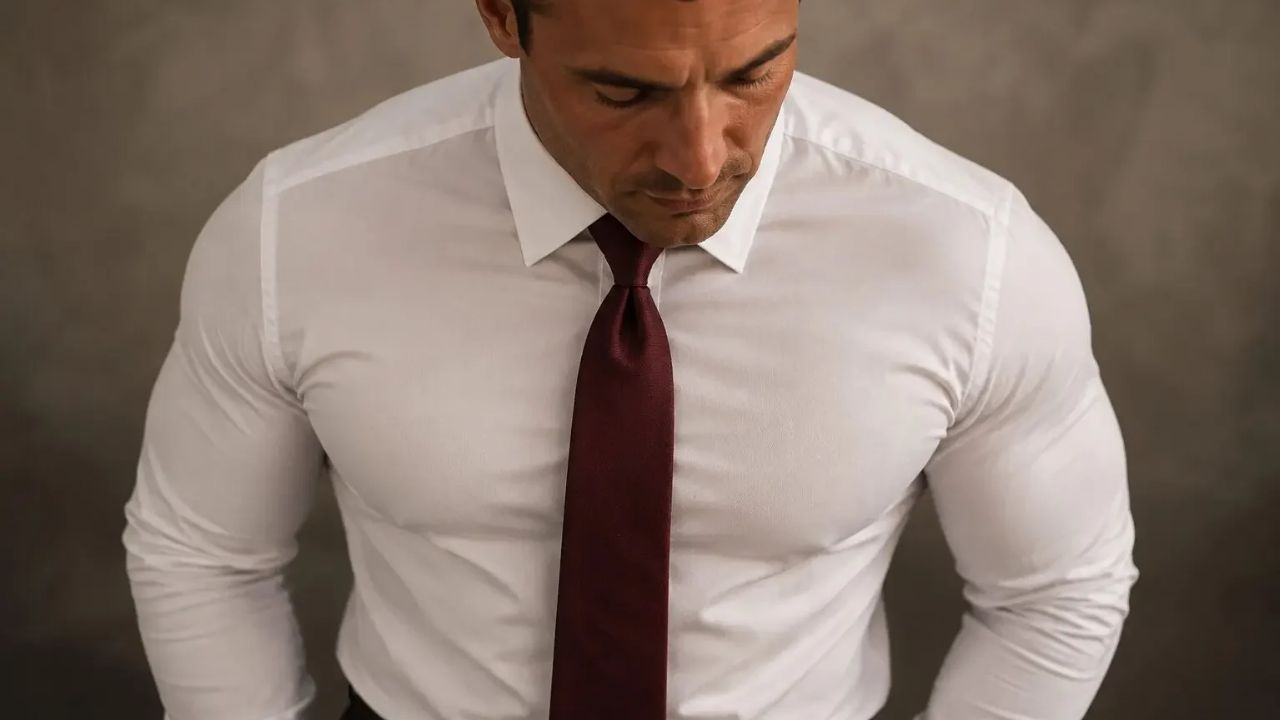
Training builds a specific silhouette: broad shoulders and chest narrowing to a smaller waist. Most clothing assumes your chest and waist grow together, which is why a shirt that closes over your chest often tents out around your middle .
Look for pieces that are fitted through the chest with enough room to breathe, tapered at the waist so the fabric follows your shape, and cut with room at the back and lats so reaching forward does not pull the front tight .
Check the buttons on a fitted shirt. If the fabric pulls into X-shaped creases between them, the chest is too tight. If there is a big fold of loose fabric at your waist when you tuck it in, the shirt is not tapered enough .
This is why athletic fit exists as a category. It sits between slim and relaxed: room through the chest, shoulders, and thighs, with a taper below. It reads as intentional rather than baggy, and it best outfits for muscular men.
Read Also: Versatile Men's Athleisure Outfits for Every Season
Sleeves Need Room for Real Arms
Arms often grow faster than sleeves allow for. A sleeve that is tight around the biceps cuts off your shape, wrinkles when you bend your elbow, and looks a size too small even when the body fits .
Short sleeves look best ending around the middle of the biceps, close to the arm without squeezing it. Long sleeves should end at the wrist bone with your arms relaxed, and still let you bend your elbow without the cuff riding halfway up your forearm .
The armhole matters as much as the sleeve. A higher, well-cut armhole gives more movement than simply making the whole sleeve wider . This is why some shirts feel restrictive even when the sleeve itself seems loose enough. The problem is where the arm connects to the body, not the sleeve length.
Trousers: Fix the Thigh and Seat First
Squats and deadlifts build thighs and glutes that most trousers are not cut for. The usual result is trousers that are tight in the thigh and seat but loose at the waist, which is the opposite of what you need .
Look for room in the seat and thighs, with the fabric skimming rather than gripping. A taper from the knee down keeps the leg looking clean rather than straight and boxy. The rise should sit securely at your natural waist so trousers stay put when you move. Some stretch in the fabric helps if you want to sit, squat, or climb stairs comfortably .
Do a slow half squat in the fitting room. If the fabric strains tight across your thighs or pulls down at the back of the waistband, the trousers need more room in the seat and thigh .
Do not simply size up. A larger standard size may solve tightness around the thighs but leave the waist and seat too loose. Athletic legs need more room through the upper trouser while the leg can remain straight or taper cleanly below the knee. Simply increasing the waist size rarely gives you the best fit .
Fabric Matters More Than You Think
A muscular body needs fabric with either a little give or enough body to hold a clean shape. Stretch cotton works well for fitted shirts and trousers that move with you. Quality knits with slight elasticity are good for polos and casual tops .
Avoid 100% cotton shirts that are stiff and restrictive. Material blends are usually better because there is more variability in how the fabric moves with your body . Fine wool and wool blends with natural stretch, good drape, and recovery provide freedom of movement while allowing the garment to retain its structure .
For casual wear, cotton-based clothes with a small amount of elastane can solve a lot of fit problems. They move with you instead of fighting you .
Specific Outfits That Work
The Knit Polo and Straight Trouser
This is one of the most reliable combinations for a muscular build. A knit polo should fit snug across the chest but have a little give as it goes down to the hem. This defines the shoulders and back without looking like you went two sizes down. The elasticated hem defines the waist, and an elasticated sleeve hem lets a little bicep show without the fabric looking poorly fitted .
Pair it with a straight-leg or relaxed trouser that does not cling. A looser trouser lets the upper body steal the show. Finish with a strong shoe, like a brown boot.
You May Also Like: Wrangler Denim Jacket With Inner Pockets Mens
The Fitted T-Shirt and Straight Jeans
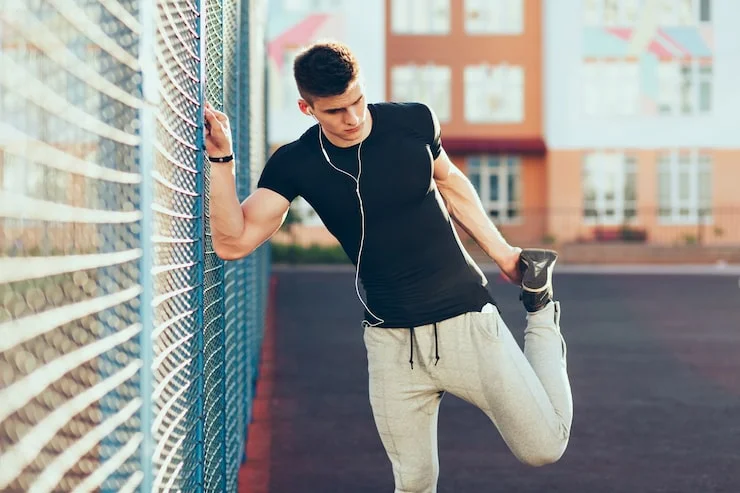
A well-fitting cotton T-shirt is always a flattering choice for a muscular frame. Team it with straight-cut jeans for a failsafe off-duty look . The key word is fitted, not tight. The shirt should skim your chest and shoulders without pulling at the seams, and the jeans should have room in the thigh without being baggy.
Avoid excessive shoulder padding on jackets or tops. It distorts the silhouette and makes the upper body look disproportionately heavy .
The Double-Breasted Suit
Muscular men often make the mistake of choosing tight-fitting suits that accentuate their physique. The result is a lot of pulling and puckering that is uncomfortable and unflattering .
A double-breasted suit with a lower button stance works because it emphasizes the V-shape of a large upper body and a slim waist without clinging to every muscle. The trousers should be wide-leg with a clean break at the shoe, giving room for developed quads .
When buying tailoring, buy a size or two up so you can move comfortably, then have a tailor alter it so the fit is perfect. A larger size with more material lets a tailor shape the garment to your proportions, accounting for the width of your shoulders and the flex of a bicep .
The Unbuttoned Shirt and Vest
If your neck and chest have grown, a buttoned-up shirt can feel restrictive. A vest with an unbuttoned shirt over it is more comfortable and still looks intentional. It is one step down from a tie but far from sloppy .
This combination works because it creates layers that break up the upper body without adding bulk. The open shirt frames the chest without straining across it.
What to Avoid?
Skinny jeans and trousers. They put you at risk of looking like a cartoon character. Slim-fit pairs often will not go past the bottom of your thighs if you have developed quads .
Super baggy clothing. While comfortable, it is unflattering. It makes you appear larger all over by drowning you in fabric . The goal is fit, not concealment.
Clothes that trace every muscle. Clothes that closely trace every muscle can make a larger physique look less elegant. Wider, more relaxed fits offer greater ease and comfort .
Sizing up without tailoring. A larger standard size may solve tightness in one area but create unnecessary volume elsewhere. The focus should shift from buying by size to dressing by proportion .
The Tailor Is Not Optional
Every source on this topic says the same thing: find a reliable tailor. Alterations are not just for suits. A good tailor can adjust waists, sleeves, seats, and trouser legs to make off-the-rack clothing work for your proportions .
Start by reassessing your measurements. The chest, shoulders, upper arms, waist, seat, and thighs are the key areas to remeasure after a significant change in physique. For shirts and jackets, prioritize the shoulders and chest. For trousers, pay attention to the seat and best outfits for muscular men.
If a jacket has become genuinely restrictive across the shoulders or chest, extensive alterations can compromise its original construction. In that case, investing in a new tailored or made-to-measure piece is the smarter choice .
Conclusion
Dressing a muscular body is not about hiding your shape or showing it off. It is about finding clothes that fit the body you actually have. Get the shoulders right. Look for taper through the waist. Give your arms and legs room to move. Choose fabrics that stretch or drape instead of fighting you. And accept that a tailor is part of the process, not an optional extra.